Add your promotional text...
Stress-Free Prep
What You Actually Need at Home (And What’s Total Nonsense)
–WHAT YOU ACTUALLY NEED AT HOME (AND WHAT’S TOTAL NONSENSE)
CanPA
5/12/20263 min read
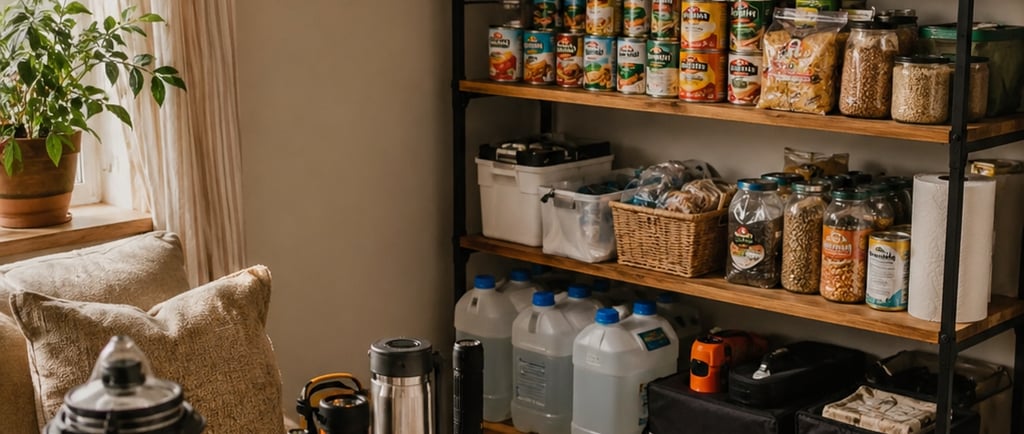
When people hear the word prepper, they often imagine the same thing:
A dark basement full of canned ravioli.
A camouflage vest hanging next to a giant survival knife.
Some guy wearing night vision goggles in the woods for absolutely no reason.
Honestly? Most normal people want nothing to do with that.
And that’s actually good news — because real-life preparedness looks completely different.
It’s calmer. Simpler. More practical.
Because the real emergencies most people face are usually things like:
A power outage during winter
Water supply problems
Empty supermarket shelves for a few days
A broken heater
Unexpected financial stress
Storms or short-term supply chain issues
Not the apocalypse.
And preparing a little for normal disruptions is simply smart. Not paranoid.
What Most People Get Wrong About Preparedness
The biggest myth is that you need expensive gear.
You don’t need:
a bunker
military equipment
25-year survival food
tactical backpacks
thousands of dollars in gadgets
Most people would already be ahead of the curve with:
some stored water
simple food
a flashlight
basic medicine
a way to cook without electricity
That alone already solves most short-term problems.
The Most Important Thing: Water
People usually think about food first.
But in a real emergency, water becomes a problem much faster.
A power outage can stop pumps. Stores can empty quickly. Delivery systems can fail temporarily.
The good news: storing water is easy.
A simple realistic setup
Five 25-liter containers sounds extreme at first.
But it’s only about:
125 liters / 33 gallons total
roughly the amount of one bathtub
For one person, that can realistically cover:
drinking
cooking
minimal washing
for around three weeks.
You don’t need to buy everything immediately.
A practical approach:
buy one container this month
another next month
slowly build your reserve
That’s cheaper, less stressful, and much more realistic long term.
Important:
Rotate stored water every 6 months
Label containers with the filling date
Or use water purification tablets for longer storage
Simple Food Storage That Actually Makes Sense
Forget freeze-dried “survival meals.”
A good emergency pantry is mostly just normal food you already eat — with a little extra stored.
Beginner-friendly food basics
Rice
cheap
filling
stores for years
works with almost everything
Pasta
fast to cook
comfort food
easy to store
Beans
protein
fiber
very affordable
dried beans store extremely long
Oats
breakfast
baking
filling meals
can even be eaten cold if necessary
Flour
Useful for:
bread
pancakes
sauces
flatbread in a pan
Canned foods
Good examples:
tomatoes
soup
tuna
beans
vegetables
stew
Oil
Very calorie-dense and useful for cooking.
Salt, spices and bouillon
Because morale matters too.
And yes:
coffee, tea and chocolate absolutely belong in your pantry.
Comfort is part of preparedness.
A Better Way To Build Supplies
Don’t buy “crisis food.”
Instead:
buy slightly more of what you already enjoy eating.
Example:
you like pasta → buy extra pasta
you eat canned soup → keep several cans
you use rice regularly → store additional bags
Then rotate everything normally.
Use the oldest products first and replace them over time.
That way:
nothing expires
nothing gets wasted
your pantry stays practical
How To Cook During A Power Outage
A simple camping stove is usually enough.
Good options:
camping gas stove
alcohol stove
charcoal grill outdoors only
Never use charcoal indoors because of carbon monoxide risk.
You can also eat many foods without cooking:
canned tuna
bread
oats
canned vegetables
peanut butter
hummus
crackers
Instant soups and couscous are also useful because they only need hot water.
Small Things That Become Extremely Valuable
The boring items are often the most important.
Useful emergency basics
flashlight
headlamp
batteries
lighter or waterproof matches
first aid kit
painkillers
radio
cash
toilet paper
A headlamp is especially underrated because it keeps both hands free.
Your 15-Minute Preparedness Check
Take a calm afternoon and ask yourself:
Water
Do I have enough water for at least a few weeks?
Food
Could I comfortably eat at home for 2–3 weeks?
Cooking
Can I prepare food without electricity?
Light
Do I know where my flashlight is right now?
If you can answer “yes” to most of these questions, you’re already better prepared than many people.
If not:
start small.
One flashlight.
One water container.
A few extra cans of food.
That’s enough to begin.
Prepared, Not Paranoid
This isn’t about fear.
It’s about reducing stress.
Because knowing you have:
water
food
light
basic supplies
creates a quiet kind of peace of mind.
And honestly?
That feeling is probably more valuable than any expensive survival gadget.
Start Small This Week
Try just one simple step:
buy one water container
organize your pantry
add a flashlight to your kitchen drawer
check your first aid kit
Small practical changes are what actually matter long term.
Prepared.
Not paranoid.